
RGV Foot & Ankle Institute
Diabetes Foot
Assessments
Annual vascular, neurological, and skin screening to protect diabetic feet and prevent complications — for patients across McAllen, Edinburg, Mission, and the Rio Grande Valley.
Diabetic Foot Health
Early detection. Real protection.
Diabetes is one of the leading causes of preventable amputation worldwide — and almost all diabetic foot complications start with changes that could have been caught early. That's exactly what a comprehensive diabetic foot assessment is designed to do.
At RGV Foot & Ankle Institute we provide thorough vascular, neurological, and skin screening for every diabetic patient — combined with practical, personalised guidance on how to protect your feet at home.
An annual assessment is one of the highest-impact things any person with diabetes can do for their long-term health. We make it easy, comfortable, and genuinely informative.
What's Included
A complete picture of your foot health
Doppler Vascular Testing
Handheld doppler ultrasound checks blood flow in your feet — one of the most important early indicators of diabetic foot risk.
Neurological Screening
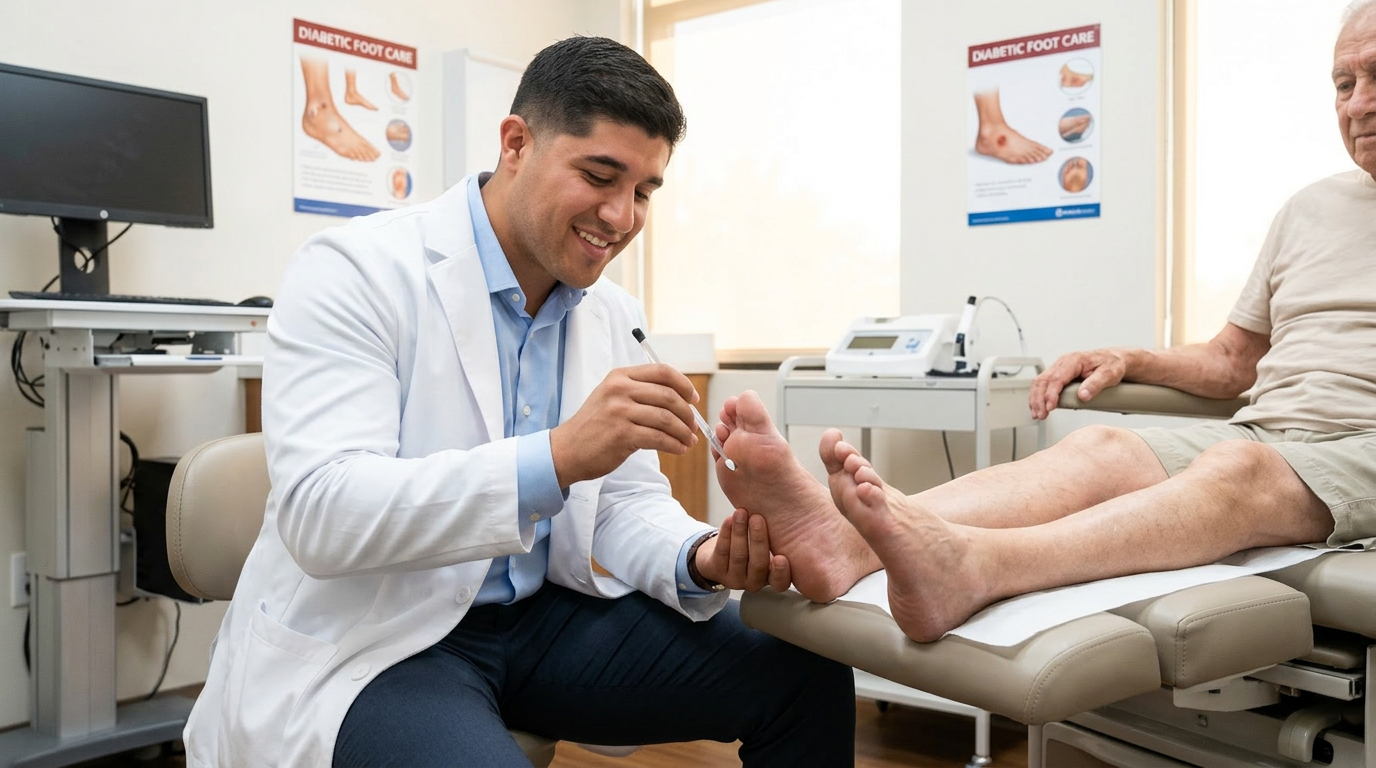
Monofilament, tuning fork, and reflex testing identify nerve damage before you notice symptoms yourself.
Skin & Nail Inspection
Thorough check for ulcers, cracks, calluses, infections, and other early warning signs that need attention.
Written Report for Your GP
Detailed findings shared with your GP or endocrinologist so your whole care team stays aligned on your foot health.
Risks We Screen For
Why diabetic feet need extra care
Diabetes affects the nerves, circulation, and skin of your feet in ways that often go unnoticed until they become serious. We screen for all of the following.
- Loss of sensation (peripheral neuropathy)
- Reduced blood flow (peripheral arterial disease)
- Dry, cracked skin and slow-healing wounds
- Foot ulcers from pressure or friction
- Infections that progress quickly
- Changes in foot shape (Charcot foot)
- Calluses and corns hiding underlying damage
- Increased risk of amputation if left unchecked
Benefits
Why annual assessments matter
A single 45-minute appointment each year is one of the most effective ways to protect your feet — and your independence — for the long term.
- Catch problems before they become serious
- Dramatically lower risk of ulceration and amputation
- Clear understanding of your individual risk level
- Personalised footwear and self-care plan
- Coordinated care between your podiatrist and GP
- Peace of mind for you and your family
How It Works
What to Expect at Your Assessment
Medical Review
We review your diabetes history, blood sugar control, medications, previous foot issues, and any new symptoms you've noticed.
Vascular Assessment
Doppler ultrasound and pulse checks evaluate blood flow to your feet — essential for catching circulation problems early.
Neurological Testing
Sensation, reflex, and vibration testing identifies any nerve damage (peripheral neuropathy) — often without obvious symptoms.
Plan & Report
You leave with a personalised plan and a written report for your GP or endocrinologist — plus a follow-up schedule matched to your risk level.
FAQ
Common Questions About Diabetic Foot Care
Why do people with diabetes need foot assessments?+
Diabetes can damage the nerves and blood vessels in your feet — often without you noticing. This combination dramatically increases the risk of foot ulcers, infections, and in serious cases amputation. Annual assessments catch these changes early, when they're still preventable and treatable.
How often should I have a diabetic foot assessment?+
Every adult with diabetes should have at least one comprehensive foot assessment per year. If you're at higher risk — with existing neuropathy, circulation problems, or a previous ulcer — we may recommend reviews every 3 to 6 months.
What happens during the appointment?+
A full diabetic foot assessment takes about 45 minutes. We review your medical history, check circulation with a doppler ultrasound, test sensation with monofilaments and tuning forks, and thoroughly inspect your skin and nails. You'll leave with a written report and a clear plan.
I don't have any foot symptoms. Do I still need this?+
Absolutely yes. One of the biggest risks with diabetes is that nerve damage often happens silently — you can lose protective sensation without realising it, meaning you wouldn't feel a small wound until it's already serious. Annual assessment is the only reliable way to catch this early.
What if you find something?+
We explain everything clearly, treat what we can on the day, and coordinate with your GP or endocrinologist for anything that needs further input. For higher-risk feet we put in place footwear, offloading, and review schedules to dramatically reduce the chance of complications.
What should I do at home between visits?+
Check your feet daily for cuts, blisters, redness, or swelling. Wash and dry them thoroughly. Moisturise dry skin (avoiding between the toes). Never walk barefoot. Wear well-fitting footwear. Call us straight away if you notice any wound, no matter how small.
Is the assessment covered by insurance?+
Most insurance plans cover annual diabetic foot exams as preventive care. Our McAllen front desk team will verify your benefits and explain any out-of-pocket costs before the appointment. HSA and FSA accounts can typically be used.
Protect your feet for the long term
Book an annual diabetic foot assessment with Dr. Galvan and his team. Same-day appointments are often available across the Rio Grande Valley.
Other Services
Minimally Invasive Bunion & Hammertoe Surgery
Micro-incision bunion and hammertoe correction — minimal scarring, walk the same day, no general anesthesia.
Laser Nail Therapy
Advanced laser treatment for fungal toenails and psoriatic nails — safe, painless, and clinically proven.
Regenerative Therapies
PRP, prolotherapy, and biologic injections that accelerate your body's natural healing of chronic foot and ankle pain.